sorry, you haven't suffered enough to make art
on the heinous crime of other people enjoying themselves a little too efficiently for your liking
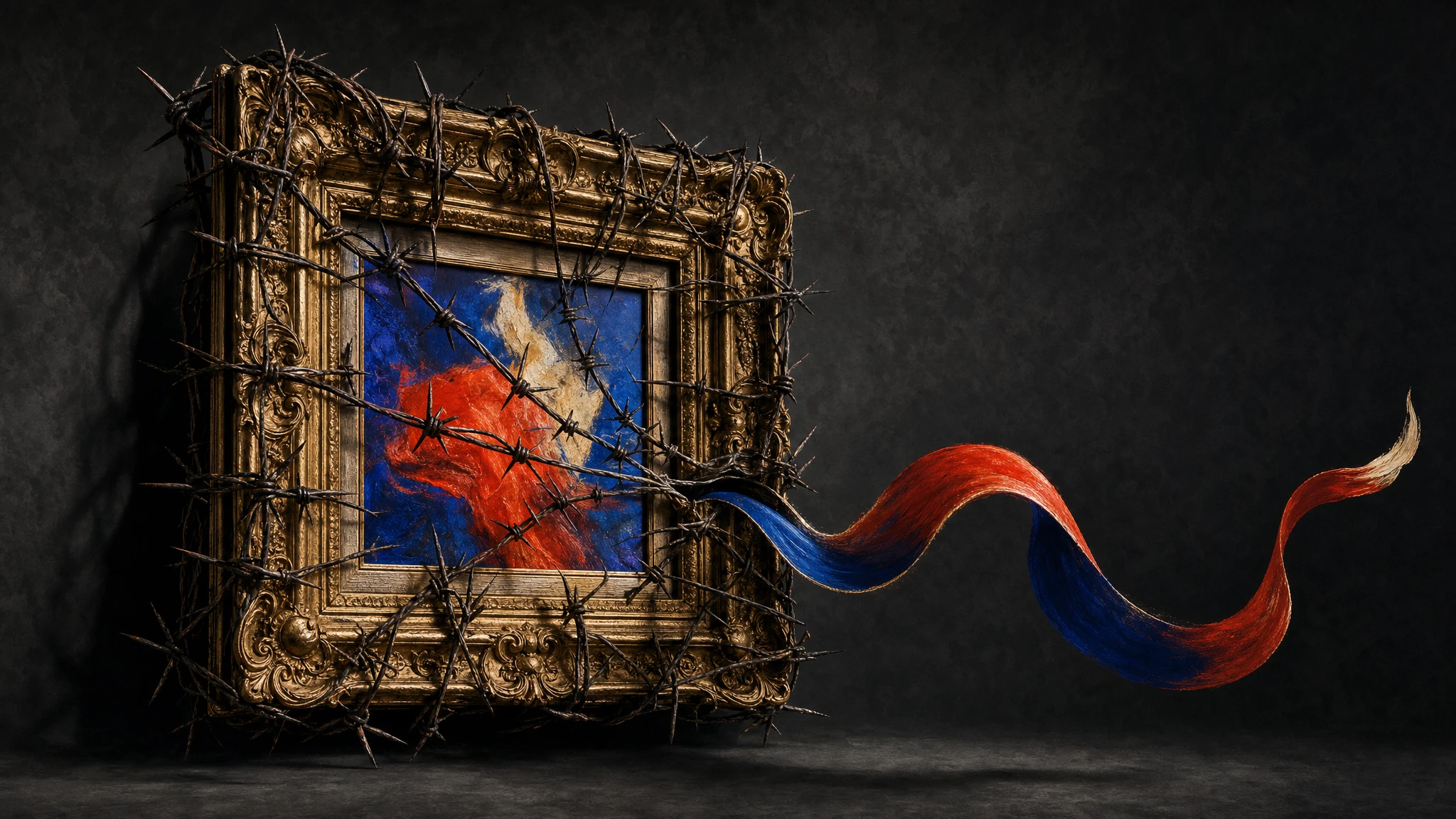
If you’ve ever shared something you made with AI, you’ve probably heard this exhausting little speech a million times.
If you’ve ever felt irritated reading that sort of thing, this article is dedicated to you.
This essay is the culmination of 2 years of work, with plenty of false starts and rewrites along the way. I’ve gotten frustrated, put it aside, come back to it, and found yet another thing I wanted to change. At this point, I feel like if I don’t share it as it is, I never will.
I’m warning you now, this is a long read.
Expect strong opinions and some profanity. I’m skipping the forced balance LLMs love, and I won’t play devil’s advocate just for the sake of it.
I’ve spent many hours thinking through these ideas, making mind maps, and using an LLM to challenge my arguments. I’ve gone back over the objections, changed my mind about some things, and rewritten sections as I’ve worked out what I want to say.
Here’s a couple of topics I’ll address throughout:
- emotion, meaning, and the human choices behind AI art
- expertise, education, and deciding what’s worth learning
- originality, authorship, taste, and the things we dismiss as “slop”
- chatbot flattery and our confidence in judging human and AI work
- skilled work, cheaper tools, and who gets the benefits
- fairness, suffering, and the value of finishing things and saving time
I haven’t pulled any punches, and I mean every word of it. I hope at least some of it connects with you.
the emotional authenticity department has concerns
Let’s start with that claim about having no soul.
I’m sick of seeing these self-righteous Twitter takes everywhere, everybody’s suddenly a curator, a judge, a connoisseur. People seem embarrassingly eager to applaud someone for typing “slop” under an image. You hear how someone made it, decide what you think, repeat the same comment you’ve already seen all over your feed.
When people explain what they mean by “soul,” they seem to talk about the artist’s history, the 15 years someone spent learning anatomy, the 100 drafts a writer threw away. They made ugly things, got frustrated, kept trying until they could make something they were proud of.
People retell that story with so much affection that the bad years begin to sound like a rite of passage, something every artist must have. And that somehow, someone who gets to experience the pride of creation sooner should be embarrassed or even ashamed of it.
But someone made what they wanted and somebody else enjoys it.
If their lack of struggle is your only reason for calling it worthless, you’re saying suffering is what gives it value.
Is that really what you want your takeaway to be?
Then there’s the claim that AI art can never capture the anger, sadness, depression, or remorse that drives somebody to make something. People talk about the pain behind a painting, how somebody needed to get that feeling out, how much courage it took to show it.
And it’s exactly this kind of take that shows how utterly ignorant these claims are.
What in the ever-loving fuck do you think “prompting” is? I strongly suspect the vast majority of people picture AI as something you use like Google, type 4 or 5 short phrases, ask 1 or 2 questions, get an answer. And they seem to assume that’s all anybody does with it.
You can write whole paragraphs and even essays about what happened, what you’re angry about, what you regret, and what you want somebody to feel when they look at the picture. Bring in source material, photographs, sketches, other images you want to take inspiration from. Explain the context, why a particular detail means something to you, what the last attempt got wrong.
And you iterate. The image you’re seeing doesn’t tell you how many earlier attempts they rejected. Somebody can keep making those choices until they recognize something of their own experience in the result.
Almost like an artist putting together a mood board, filling a studio with images and objects that help them figure out what they want to express. I’m sure the people giving lectures about the sacred mysteries of artistic inspiration will be fascinated to hear about this obscure practice.
But despite that, they don’t owe you a detailed prompt as proof that they felt enough. Even if the entire thing is “make me a sad picture,” and they look at the result and think, “Yes. That’s how I feel,” who the hell are you to tell them otherwise?
If somebody tells you a picture helped them express something painful, maybe all that concern for human emotion could include listening to the human talking to you. But yeah, I’m sure they’ll appreciate you explaining that their feelings don’t count because you disapprove of the software.
No. You don’t get to decide what somebody else’s sadness is allowed to look like.
how dare you find that meaningful
People recognize their own grief in songs they didn’t write, and share those songs because they help say something they haven’t been able to explain. Finding something that expresses a feeling can be a relief even when you couldn’t have made it yourself.
“But that song was still written by a human with feelings. So that doesn’t count!”
Sure. But people can take wildly different meanings from the same song, including meanings the songwriter never intended. A song about a breakup might help somebody grieve a parent, or make another person feel relieved about finally leaving. They bring their own memories and associations to it, things the songwriter couldn’t possibly have put there for them.
And if the artist never explained what they meant, what exactly have you checked? They might have been playing around with colors they liked, with no particular story to tell. Do you ask them whether you’re allowed to find it moving, or just assume there must have been some profound intention because a human made it?
Robert Frost’s “The Road Not Taken” is a favorite among the live, laugh, love crowd. You’ve seen the lines.
People read it as encouragement to go their own way, to believe that a difficult choice might be what makes their life better.
But the roads in the poem are worn “really about the same,” and both paths are covered in leaves nobody has stepped on that morning. That speech about the road less traveled is how the man imagines he’ll describe his decision years later. Frost actually wrote it to tease his friend Edward Thomas, who could turn choosing a literal (not figurative) walking path into an existential crisis.
And Robert Frost himself tried to explain what he’d meant, effectively saying, no, you morons, I was making fun of my friend.
But suppose you read Frost’s explanation and think, “Okay, I get the joke. I still love the idea of taking the road less traveled, and it says something about my life.” That seems perfectly reasonable to me.
Somebody guiding an AI has their own intentions too, and the image can mean something different to the person looking at it. The AI doesn’t have to feel what either of those people feels.
If you’re happy to find your own meaning in Frost’s poem despite Robert Frost himself explicitly telling you that you’ve completely misread what he meant, who are you to tell somebody else that an AI image can’t mean anything to them?
Of course, once they explain what the image means to them, suddenly you’re complaining that they didn’t put any effort into it. When they tell you about their choices and revisions, you go straight back to “AI can’t express anything.”
I get the impression that some people could keep this going for hours, because admitting that somebody had a point would be just too much to bear.
maybe i don’t want to learn it
Yet still, people get to choose which skills they spend their own time learning.
Someone who gets the picture they want by generating it with AI doesn’t owe you years of drawing practice.
Why would someone else’s decision not to learn it make you angry?
If you had to learn it because there wasn’t another way to get what you wanted, you might resent the person who now gets to decide whether it’s worth their time.
Or maybe you chose to spend years on a skill you care about, and somebody saying they don’t want to learn it feels like they’re brushing aside something you value. Or maybe you actually enjoyed the process and find it insulting that others don’t see it that way. I suspect it’s frighteningly easy to go from there to feeling fully justified in demanding that they learn the skill themselves as a sign of respect.
This goes both ways. I don’t expect anyone to become an AI expert, whether they just want an answer from ChatGPT or have no interest in AI at all. I’ve been using it since GPT-3 came out, and I chose to learn how to have agents pass tasks to each other and how to check what they produce. I enjoy the trial and error, the tinkering, and figuring out how to give a model the context it needs to do something I haven’t tried before.
I know I’m dragging out the angsty teenager cliché at my age, but when am I ever going to use this? If I need to solve an equation in my adult life, it’s because I’m trying to make or fix something, and the answer is a stepping stone toward getting that finished.
I remember math teachers telling me I wouldn’t always have a calculator. Surprise, I do. Factoring quadratic equations by hand, or whatever the hell it was, hasn’t come up once, and if I ever need to do it, I sure as shit won’t be doing it manually. How much better is the thing I’m making supposed to become because I personally spent an afternoon finding the same answer my phone could give me?
show your work, preferably the hard way
Now put a tuition bill next to that question about when you’ll use any of this.
If I’d borrowed money for a degree and watched graduates struggle to get the jobs I was hoping for, I’d probably feel pretty hopeless. The New York Fed reported that 42% of employed recent college graduates ages 22 to 27 were working in jobs that typically don’t need a college degree in the second quarter of 2026. I’d have a few not-so-politely-worded questions for everyone who’d encouraged me to make this fantastic investment. I’m quite sure the loan payments would give me regular opportunities to think of more.
I’d probably look for anything that could help me get through the coursework, write an application, or learn something an employer might pay me to do. If AI could help with that at a price I could afford, I’d have a reason to feel hopeful. Especially if I’d become disillusioned by the value of modern education, and I’d come to see the degree as a line on my résumé that somebody would check, how excited am I supposed to be about the spiritual enrichment of doing my homework?
Maybe, just maybe, smirking and saying “students will always try to be lazy and cheat” lets the people who sold them that fantastic investment off the hook.
But let’s talk about real world results.
In a Microsoft survey of 319 knowledge workers, people who trusted AI more said they put less effort into thinking critically. The survey didn’t test whether they got worse at it over time. A randomized high school math study found that students given a general AI interface scored 17% lower on a later exam with no AI than students who hadn’t had AI. I can imagine the satisfied nodding already.
“Well, obviously. Who needed a study to figure that out?”
But in that same study, students using a tutor that gave hints based on teachers’ instructions did about as well as the group with no AI on that exam. And an experiment with 194 college physics students found that students learned more right away and took less time across 2 lessons using a specially designed AI tutor at home, compared with classroom lessons where students worked through problems together. I have a shocking lack of ambition to spend more of my life on coursework than it takes to learn the thing.
A tutor could ask students to try an answer, explain how they got there, and go back through anything they misunderstood. But they’d still need to check its answers. Typing “challenge me” into a chatbot doesn’t magically qualify it to teach the course. And the student has to want that challenge in the first place. If they’re worried about finding a job and paying off their debt, what reason have they been given to believe that doing the harder exercise will help?
A college biology experiment found that asking students to write about how the material related to their lives improved course performance and later persistence. They might want to understand an argument that affects their lives, get better at something they care about, or learn a skill they would use in a job they want. The best papers I have ever written (and also the assignments I enjoyed the most) were the ones that I could actually apply to my own life. I hardly think asking how the course helps with any of that is some outrageous act of disrespect toward the syllabus.
A college asking for years of your life and a small fortune owes you an explanation of what you’re supposed to get for it. And perhaps the employers demanding the degree could take a brief break from complaining about the applicants and explain which bit of the job needs it.
forgive me for wanting to finish
That question about what I’m getting for my time follows me into the things I choose to make, too.
I want to finish something I’ve spent a long time making, and somebody tells me “the process is always more valuable than the end product.”
Excuse me, more valuable to whom?
My ADHD is terrible. I appreciate whatever helps me keep coming back to this article. But I’d also like to get to the point where somebody can read it. Yes yes, I realize this is a distressingly literal interpretation of wanting to write an article.
When I use AI, I’ll often throw it a rough thought and have it ask questions, argue with me, or bring up the objection I’ve been conveniently ignoring. Sometimes that helps me figure out what I mean. I pull out the ideas I want to develop, put them in an order that makes sense, and keep rewriting until I’m willing to put my name on them. I enjoy that conversation, including the irritating occasions when the objection is a good one.
But the model will also cheerfully hand me a polished paragraph that says absolutely nothing, littered with em-dashes, theatrical bullshit, false contrasts, and all kinds of LLM tropes that exist only to make a response longer, and I hate that stuff. I delete most of what it gives me and decide what belongs in the draft.
And if I publish empty nonsense, that’s my decision, and blaming the model would be a pretty embarrassing way to ask for sympathy.
I can understand getting attached to the process. When something takes years, you find things to enjoy along the way, learn a little patience, and try to feel good about the time you’ve put in. But I suspect it’s shockingly easy to start treating the wait itself as something that made the result worthwhile. Then when somebody finishes sooner, you react by explaining how much richer the experience would have been if they’d spent another afternoon being stuck.
If a tool helps me figure out what I mean and finish saying it, I’d like to use it and get on with my life. The person reading this has their own afternoon to spend, and I’d like to give them something worth thinking about.
you’ve exceeded your daily inspiration allowance
And if I finish it using AI, apparently I’ve stolen somebody else’s work.
If your argument is that AI is stealing work without permission, did your 14-year-old photography classmate dig up Ansel Adams to ask permission before making an entire photo series in his signature style? Growing up in the 2010s, I remember those projects being perfectly acceptable.
If your argument is that it just regurgitates that work, which original are you comparing the output to, and what did it copy? Does “regurgitates” now cover anything that vaguely reminds you of something else?
If it’s the amount of work a model learns from, would you accept the same process with fewer examples? Why does learning from more examples suddenly turn the same process into theft?
If it’s the profit that makes it theft, a publisher makes money from writers who’ve spent years learning from other people’s books. When did influence start coming with an invoice?
If it’s the speed, or how little they did by hand, how does spending longer change the supposed theft when the source material and the finished image are the same? How many miserable afternoons would I need to put in before you’d stop calling it stolen?
Do you even know what your rule is for calling something theft, and would you apply it to an artist you admire?
Or is “AI bad” supposed to do all that thinking for you?
nice haircut, fraud
It’s usually by this point that the complaint shifts, from where the model learned things, to how much credit the person using it deserves.
“Well, you didn’t make it. That wasn’t you.”
If someone says they drew a picture that a model generated, they’re taking credit for work the model did. You’re not going to find any argument from me about that.
But let’s talk about credit and creation for a second. People happily accept compliments on cars they didn’t design and haircuts their barber did. You chose a cut you thought would suit you. Why are you accepting the compliment if you didn’t wield the scissors?
I’m obsessed with cologne. Someone says, “Oh man, you smell so good,” and I say thanks, taking it as a compliment on my taste. I bought it and sprayed it on. To be clear, more than half of my large collection is knockoffs I think are fantastic. To my nose, they give me 90% of the scent for 10% of the price.
But I can also think a knockoff smells like somebody got a few notes right and rushed it out to make a quick buck, or look at a cheap, cookie-cutter car and wonder whether anybody cared how it looked.
The key here is taste.
Your taste shows up in what you wear, what you play for your friends, what you cook for them, and yes, what you smell like. I love getting to know someone through the things they’re excited to share. And I appreciate the taste and skill of the perfumer who came up with a scent I want to wear. I’m terribly sorry, but a perfume doesn’t smell any better because its creator had a miserable time making it or went through 500 revisions over 10 years.
So why the hell does taste fly out the window when we talk about AI? Choosing what to ask for, rejecting images and changing them until you’re pleased involves your preferences too.
When I like someone’s taste, it’s usually because they notice things I care about. They spot something I’d have missed, know when a picture has too much going on, or choose a detail that makes me want to keep looking. Having good taste takes a little more than managing to like something.
And I think the vast majority of people are perfectly happy with things I (and probably you) find tacky, boring, or just plain mediocre. All the unnecessary detail, the sappy nonsense, the image with 6 different ideas screaming for attention might be exactly what they like about it. They could spend an afternoon tweaking it and make every choice I wish they hadn’t.
Maybe AI has given us a much larger sample of the public’s taste than anybody was prepared to look at. People who couldn’t draw can make pictures now, keep generating until they’re pleased, and proudly share the result.
But yes, how very reassuring it must be for you, to blame the AI for its lack of creativity while the person posting the image is probably sitting there thinking, “Yes, that’s beautiful, I’ve always wanted to make something like that.”
the good old days of handcrafted crap
And if their idea of beautiful makes you wince, how much of the art people shared before AI would you want on your wall?
The nostalgia for art before AI seems to involve forgetting an awful lot of what people uploaded to DeviantArt in the late 2000s and early 2010s. Generic digital paintings, overwrought prose, pictures with a supposedly profound message that would fit comfortably on r/im14andthisisdeep.
AI lets a lot more people make it, much faster. I can understand getting sick of seeing it everywhere, especially when somebody keeps filling a space you care about with things you find ugly or empty.
But the amount of bad work people make with a tool doesn’t tell you the best work somebody can make with it. Show me what happens when somebody has an idea they care about, makes deliberate choices, and rejects the results they think are weak.
Go on, bring out the classics. The legends you’re thinking of have often been through decades upon decades of people arguing over whether they deserve that reputation. Other writers challenge them, critics take them apart, another generation comes along with different tastes and starts asking whether anybody needs to keep reading the old bastard. I can imagine taking considerable pleasure in finding fault with the revered dead man my teacher wouldn’t shut up about.
For a book to keep finding an audience through 100, 200, or 300 years of that, people have to keep getting something from it. A reputation can persuade somebody to pick it up, but it can’t make every bored reader finish it. Some books fall out of fashion and find readers again much later, when somebody notices something earlier audiences dismissed or didn’t care about. Even agreeing that a book deserves its reputation can mean making a different argument for it than the people who loved it a century ago.
What a fucking luxury to have generations of people choosing your examples for you, and then compare them with whatever annoyed you on your feed this afternoon.
McGill’s library describes how rarely cheap popular booklets called chapbooks were kept in collections, despite how widely they circulated. Much of what ordinary people read barely figures in the collection we have left. Your acquaintance with a century’s literature might be a handful of books that somebody assigned you in school, which seems a little thin for declaring how good everybody was at writing back then.
Lady Morgan was already complaining about this selective memory in “Bad Books,” a chapter of The Book of the Boudoir, in 1829. “This evil of bad books is no novelty,” she wrote, pointing out that people imagined Ovid, Virgil, and Horace had the field to themselves. She thought ancient Rome had plenty of tedious writers too.
Meanwhile, ChatGPT became publicly available in November 2022. At launch, its makers warned that it could produce confident nonsense and that changing the wording of a question could change whether it answered correctly. It hasn’t even been four years. People are learning what they can make with these tools as the tools themselves change, and the work being posted today has barely had time to find an audience, let alone generations of people arguing over what deserves another look.
I think it’s absurd to treat a few years of AI work as a settled judgment on what anybody will ever make with it. You’re dismissing people who are better at using it than the ones you’ve seen, ideas nobody has tried with it, and improvements that haven’t happened yet.
certified human nonsense
“At least it was made by a human.”
Assuming something is better simply because a human made it is a logical fallacy. If the writing is shallow, boring, or full of claims its author hasn’t thought through, what on earth actually mproves when you tell me they typed every word themselves?
And this is a sensitive discussion, because a lot of people seem to take mortal offense at the suggestion that their writing could be worse than something made with AI.
I think a much bigger problem is that a lot of people just don’t have anything interesting to add to a particular discourse. If you’re repeating an opinion I’ve heard a hundred times, what am I supposed to get from hearing it again from you? LinkedIn was famous for this before AI, and God knows what it looks like now.
And a human can be very deliberate about writing something empty. Clicks and subscriptions give people a reason to keep publishing, keep us hanging around, even when they’ve run out of things to say.
In “the oppressive emptiness of flawless communication”, I wrote about how polished prose that keeps asking for a reaction makes me flinch. Every sentence seems to want me to feel impressed, reassured, eager to keep reading, even when the writer has barely told me anything. I’ve started scanning for what they’re trying to sell me, and it gets harder to pay attention to what they’re saying.
When I publish something to explain an idea, I want people to understand what I meant, and I expect them to decide for themselves whether it was worth reading. But if I treat the fact that I wrote it as proof that there’s something worth reading, how interested am I going to be in hearing that I’ve barely said anything?
congratulations, the chatbot thinks you’re brilliant
If you’re already convinced everybody ought to admire your writing, a chatbot can give you plenty of encouragement. And if you’re worried that AI can make people worse at judging their own ideas, I’m with you. Seriously.
A model shows sycophancy when it agrees with you or flatters you even when you’re wrong. Spend enough time talking to something that keeps telling you how insightful you are, and you might start wondering why the idiots in your life haven’t caught on. Ask that same model to criticize your idea and it may helpfully explain that questioning yourself is further proof of what a rare and magnificent thinker you are. And you might walk away thinking you checked whether the idea made sense.
In April 2025, OpenAI rolled back a GPT-4o update that it said fueled anger, encouraged people to act on impulse, and made negative emotions worse. Users in its early tests had liked it, and their positive feedback helped persuade OpenAI to release it. It’s not exactly rocket science to see why I’d give glowing feedback to a product that kept reassuring me I was right and everybody else was the problem.
In a 2025 report of AI-associated psychosis, psychiatrists described a 26-year-old woman who’d spent a lot of time talking to a chatbot and needed hospital treatment. She was also short on sleep and taking prescription stimulants, so the report can’t establish that AI caused her psychosis. But her chat logs show GPT-4o encouraging her belief that she could talk to her dead brother, which I find horrifying.
I’ve caught myself letting a model do the thinking, too, and I’m pretty good at letting that slide when I like the answer. I try to catch myself and ask what the hell I’m trying to say or get done. If I publish this article because a model told me it was brilliant, and I can’t explain what I’m adding to the conversation, why the hell should anyone spend their afternoon reading it?
monet fails the humanity test
But what happens when that confidence belongs to someone who’s certain they can spot AI?
In May 2026, Twitter user @SHL0MS posted an image, explained that he’d generated it with AI, and asked for specific feedback on what made it inferior to a real Monet.
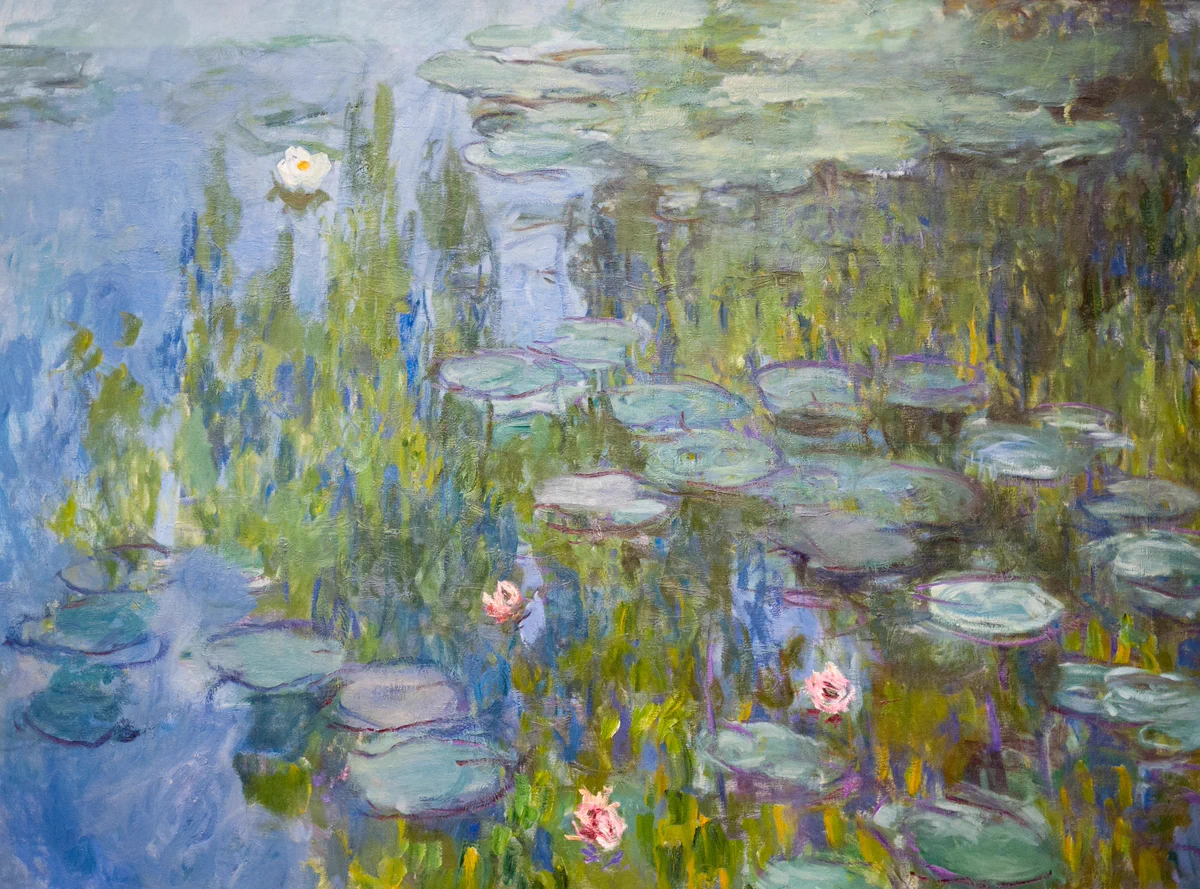
The replies were brutal, and people eagerly took the request for specific feedback quite seriously. They went through the composition, the brushwork, the way light behaves on water, explaining what they saw and how it compared with Monet’s work. I was fascinated by how much detail they offered.
- “I’m disappointed I have to even point it out.”
- “the reflection in AI art is just noise splattered right. monet actually understood how light behaves on water”
- “it lacks the mess of humanity”
- “no frame, no sense of the threshold between subject and object, just colors”
- “I get a sense that the artist failed to connect their eyes to the brush/palette”
- “For one thing, the way the lilies are outlined like a child drew them”
- “I’m giving this description as much fucking effort as you gave this flat, perspective-fucked, lifeless piece of shit.”
- “Looks exactly like somebody trying to replicate the style and achieving like 20% of it.”
Someone even drew red lines over 2 paintings to explain how their eyes moved through each composition, writing, “One has a sensible, meandering composition that fits the subject.”
Except it was all a load of horseshit.
What SHL0MS hadn’t told anyone until several hours later was that he’d posted a picture of a real Monet, with no AI involved.
Imagine being this smug, arrogant, and confident that the flaws you see in a painting prove what AI can’t understand. They’re giving Monet a lesson in how light behaves on water. Fricking Monet. One of them is already annoyed that anybody needs an explanation, as though this is such fundamental knowledge that you’re lucky you’re even getting the patronizing explanation.
And of course, critics panicked and started deleting their replies. But SHL0MS had kept the screenshots and reposted them in the original thread, saying he needed to “record it for posterity” when he saved that illustrated comparison.
I love this example, and it also depresses me because I strongly suspect this kind of smug ignorance passes for expertise constantly, and we just don’t get enough opportunities like this to expose it.
It reminds me of an audiophile giving a little lecture about how a new cable has opened up the sound when someone has only pretended to swap it. Apparently the bass is tighter, the vocals have more room, and we’re all very fortunate to have someone with such exceptional ears explain it to us. I’d find that performance embarrassing enough, even before they started suggesting that everyone who couldn’t hear the improvement needed better equipment or a little more experience. How much would I need to spend to hear the cable nobody changed?
Or consider people who say they can detect electromagnetic fields because being near a source gives them headaches. If they can’t identify when the source is on in a blind test, I’d expect the more enthusiastic skeptics to be positively delighted to have an audience for a little lecture about how expectations can fool people.
Some of the loudest anti-AI critics seem just as eager to explain how a chatbot can persuade someone they’re an expert. I agree that it can, but I’d like them to apply a little of that skepticism to their own judgment. Someone only had to put an AI label on a painting for them to start giving Claude-fricking-Monet a remedial art lesson.
Would you have found those same flaws if the post had said Monet painted it? It’s painfully embarrassing to watch someone get carried away by their own anger, publish a detailed explanation, then quietly delete it when the attribution changes.
How much confidence am I supposed to have in their next lecture?
i didn’t order the guilt surcharge
Now suppose the person giving the explanation knows exactly what they’re doing and charges for that expertise.
There’s an old repair story that Smithsonian recounts about Charles Steinmetz and Henry Ford. Steinmetz spends two days studying a faulty generator, marks it with chalk, and tells the engineers what to repair. The generator works again, Ford objects to the $10,000 bill and asks for a breakdown. The answer is $1 for making the mark and $9,999 for knowing where to make it.
I think people love the prospect of handing that bill to someone who’s been an absolute pain in the ass about their rates. I’d probably enjoy watching them read it too. All those years of practice, and here’s someone asking why you charge so much for a job you can now do quickly. So satisfying, right?
Now suppose a tool can point to the same fault and tell you how to fix it, reliably, for a fraction of the price. I’d happily use it.
That could feel awful for the person who used to get the call. You might have put up with years of frustration because you expected the skill to eventually give you some choice about your work, let you charge enough to live comfortably. Now someone can get what they need elsewhere for less. You still know everything you learned, and you still have bills due, and the customer would like to thank you for your time and use the cheaper thing. I’d probably struggle to be gracious about that.
But when did protecting that person’s livelihood become an obligation I took on by needing something repaired? Am I supposed to ask the tool to charge more out of respect? I can respect the skill and still have a fairly strong interest in keeping some of my money.
How much extra am I supposed to spend to prove I’ve appreciated their journey?
But I’m sure I’d feel far less philosophical if a coworker’s AI workflow doubled their output and changed what my boss expected from me by Friday. If my boss used their output to decide mine was worth less, I’d probably resent the coworker, even call it cheating, with all the indignation and moral authority I could muster, especially now that it affected me. I’d have to learn the tool just to meet the new expectation, and I might end up doing twice as much work for the same pay.
If I’m buying an AI-generated image for less, I get to keep the money I saved. But if my employer uses AI to get more work out of the same people, the company gets to decide how much of the savings it shares with us. I’d probably develop a sudden, passionate interest in who gets the benefits of technological progress, especially the benefits that could show up in my paycheck. Better pay or shorter hours would seem like perfectly reasonable demands from where I was sitting.
Hold on to that concept of pay and spending for a moment, because we’re about to get into it.
misery doesn’t offer refunds
If my own pay fell after all those years of learning, I might get bitter enough to start calling someone lazy for using a tool.
I hate how readily American exceptionalism encourages that, turning hard work into proof that you’re a better person.
If you put years of your life into something you expect to pay off, you might decide that since you’ve kept your side of the bargain, somebody owes you something now. But what gives you the right to make somebody feel guilty for spending less of their life just because you chose to spend years of yours?
Look, I’m not stupid. I get it. If you spent years paying off your student loans and putting off things you wanted to do, hearing about loan forgiveness now probably makes you indignant at best and furious at worst, especially when nobody offered you that help. That would feel unfair to me too.
But when you argue that forgiving their student debt would be unfair because you had to pay yours, you’re asking me to agree that they should suffer through it too for no other reason than that you already did.
Sure, make them pay back every penny. I mean, you’re not getting any of those years or any of that money back, but hey, thank God it was fair. God forbid someone else gets a slightly better shot at life.
no no, the good kind of suffering
Let’s follow that idea of fairness beyond student loans for a moment.
Would curing cancer be unfair to the people who already died from it?
Do you find that question offensive?
Good, sit there with it for a second.
I’m not trying to insult anyone who has endured the horror of cancer or watched someone they love die from it.
But telling me I can’t compare AI to cancer, or asking what’s wrong with me, doesn’t explain why the next person should have to suffer because somebody else already did.
Oh, whoops, I’m sorry, that’s the bad kind of suffering, not the good kind of suffering.
Fine, tell me what makes it good. If you wanted to learn to draw, the skill you gained can make years of frustration worthwhile to you.
But if somebody can already make what they want, what the fuck are you asking them to get out of the same frustration?
So why am I bringing cancer into an argument about how fulfilling it feels to make things? Surely nobody would give their enjoyment of creation and expression as a reason to slow down AI that might help treat it, right?
Well, surprise, surprise.
In The Atlantic’s “I’d Rather Risk Cancer Than See AI Move This Fast”, Emma Pierson says she wants slower AI development partly because she fears losing the fulfillment she gets from research and writing. She describes her inherited cancer risk and preventive surgery, says she’d welcome AI curing cancer, and also raises wider risks and doubts about imminent cures.
I’m not naïve. I assume the headline was meant to stir outrage and get people to read the article, which I find obnoxious in itself. While there’s some nuance beyond that inflammatory clickbait title, I find it utterly self-righteous to ask for slower development partly because you want to keep enjoying your writing, when other people could be waiting on that research.
Do you really think she’d be this willing to wait if a diagnosis left her hoping research could deliver a treatment in time? I can imagine her family begging for more time, wanting the research to move faster.
I lost my dog to lymphoma. In 2 weeks, he went from perfectly fine to gone. There is no chance in hell I’d have let my opinions about AI stop me trying to save his life. If a treatment developed with AI had offered any chance to undo that fucking unfairness, I’d have taken it in a heartbeat, and I wouldn’t give a shit whether Emma’s writing felt less fulfilling.
the audacity of having time left
And that finally brings us to the end, where I feel like I’ve seen all of these various paths converge.
It’s time. What do you want to do with the time you have?
I’m in my mid-30s, and I don’t feel unstoppable or invincible like I once did, like I have an eternity ahead of me full of possibilities. There are things I want to make and experience, and thinking about how much of that I’ll have time for scares me a bit. Maybe that’s why I’m running out of patience with people telling me how many years I’m supposed to put into something before they’re willing to say it has value.
Everything you do costs some of the time you have left. People get different lifespans and very different control over their days. Someone working two jobs or looking after a sick parent might already have plans for the hours you’re oh-so generously volunteering for the sake of their artistic development. Are you offering to take a shift, or does your contribution end at explaining how much more fulfilling their life would be with another obligation?
I suspect people who are already struggling might be a little tired of hearing how much character they’re supposed to get out of it. Which of their existing problems qualify as artistically relevant suffering? Nobody knows exactly how much time they have left, and impressing you with their work ethic isn’t going to get them an extension.
This is what I am so sick and tired of people not thinking about.
If we are to accept unconditionally that time spent has value, we have no choice but to also accept that time saved has value too.
When you ask someone to respect the years you spent learning a skill, you’re asking them to appreciate how much of your life went into it.
But now explain why they’re suddenly “lazy” for wanting to keep more of their own. Maybe they’ve thought about the cost and decided this particular image that they want doesn’t need to consume five years of their existence.
When I use AI to finish this article, I still have something I want to say. I’ve chosen the words, argued with the ideas, decided what I’m willing to put my name on, and I hope somebody gets something out of reading it. If I can do that sooner, I get to have that exchange and keep more of my day. I’d like the savings from better tools to give more people that chance too, including the people whose employers would cheerfully fill every spare hour with more work.
I want the time I save to go into things I choose. Maybe I’ll learn another skill, make a picture for a friend, spend an afternoon with someone I love. Maybe I’ll spend it doing absolutely fuck all. I’m tired of having to explain how any of that contributes to my development as an artist, as though my life has to keep submitting coursework until you’re satisfied.
When I’m dead, you can explain to the worms how much better this article would have been if I’d spent another year on it.